

 |
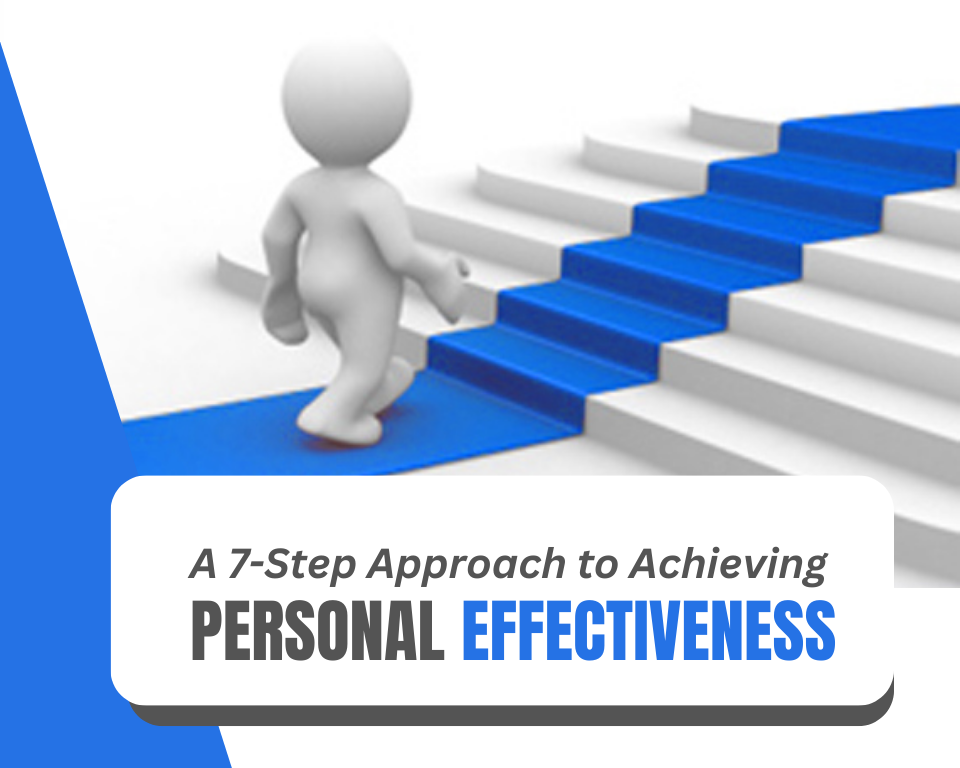
A 7-Step Approach to Achieving Personal Effectiveness |
Achieving personal effectiveness is a fundamental, yet often overlooked, aspect of living a fulfilling life. It is the key to unlocking your true potential and achieving the success you've always dreamed of. It's not just about getting things done; it's about doing them in a way that aligns with your values and aspirations.
It all starts with defining your goals and establishing your priorities, taking some time for deep reflection and introspection, exploring what truly matters to you and what you want to achieve in life. Once you have a clear vision, you can then create a roadmap to success by breaking down your goals into achievable milestones. This will give you a sense of direction and purpose, allowing you to make consistent progress.
However, setting goals is just the beginning; there are other steps you can take to maximize your potential. These include but are not limited to the following:
Develop Strong Time Management Skills - Time is a precious resource, and learning to manage it effectively is crucial. Start by analyzing your current habits and identifying areas for improvement. Are you spending too much time on non-essential tasks? Are there any time-wasting activities that you can eliminate? Utilize tools like “to-do” lists, calendars, and time-tracking apps to help you stay organized and on track.
Cultivate a Growth Mindset - Another essential aspect of personal effectiveness is adopting a growth mindset. Embrace the belief that you can develop your abilities and intelligence through hard work, dedication, and the right strategies. This mindset allows you to view challenges as opportunities for growth, rather than obstacles to be feared.
Stay Adaptable and Relevant - Stay adaptable and relevant by constantly seeking out opportunities to learn and improve. Attend workshops, read books, take online courses, and surround yourself with individuals who inspire and challenge you.
Build Strong Communication Skills - Developing strong listening, speaking, and writing skills will help you build better relationships, express yourself clearly, and collaborate more effectively. Practice active listening, ask open-ended questions, and develop empathy to establish trust and rapport with others.
Surround Yourself with Supportive Individuals - Surround yourself with positive, like-minded individuals who believe in your potential. Seek out mentors or coaches who can guide you on your journey to personal effectiveness.
Stay Organized and Disciplined - To truly excel, you also need to stay organized, disciplined, and focused. Keep your physical and digital spaces clutter-free to promote clarity, focus, and productivity. Establish routines and habits that support your goals and priorities, allowing you to stay consistent and disciplined.
Practice Self-Care and Maintain Balance - Practice self-care and maintain a healthy work-life balance to ensure you have the energy, focus, and resilience needed to tackle challenges and achieve success.
Personal effectiveness is the key to unlocking your true potential and living a fulfilling life. Implement the actionable tips and strategies discussed in this article to develop the skills, mindset, and habits necessary to excel in all areas of your life. Imagine waking up each morning, excited to tackle the day ahead, confident in your abilities, and knowing that you are living a life that aligns with your values and aspirations. It's within your reach. Start now and watch as your life transforms and you experience the success and fulfillment you deserve.
Join the conversation
Related Articles
|
Project Management and Leadership SkillsThe leadership development level of a project manager is important to a successful project. Effective leadership skills must be used as needed over the project life cycle.
Project managers are responsible for project delivery and consequently are uniquely placed to make a positive or negative imp [Read more]
|
Posted: 5 years ago |

|
CBN’s Disclosure Requirements For Bank: The FactsOf the four-point agenda stressed by the Governor, Central Bank of Nigeria, Mallam Sanusi Lamido Sanusi, on assumption of office, the need to strengthen regulation and supervision through enhanced disclosures by financial institutions, stands out clearly. This was sequel to the backdrop of the CBN&r [Read more]
|
Posted: 15 years ago |
|
|
Nominal Anchor for Monetary PolicyA nominal anchor for monetary policy is a single variable or device which the central bank uses to pin down expectations of private agents about the nominal price level or its path or about what the Bank might do with respect to achieving that path (Krugman, 2003). Generally, the two kinds of nomina [Read more]
|
Posted: 15 years ago |

Management Challenge
Quote of the Day
Featured Video
Searching for Management Training Courses? Local or International?