

 |
Nigeria Remains a Strong Growth Market for Wheat |
Nigeria’s demand for wheat based foods is large and growing. The GON cassava flour import-substitution initiative is impacting U.S. wheat market share negatively but market share is expected to rebound as Nigeria and its neighboring countries continue to demand high quality wheat based food s and the market continues to grow.
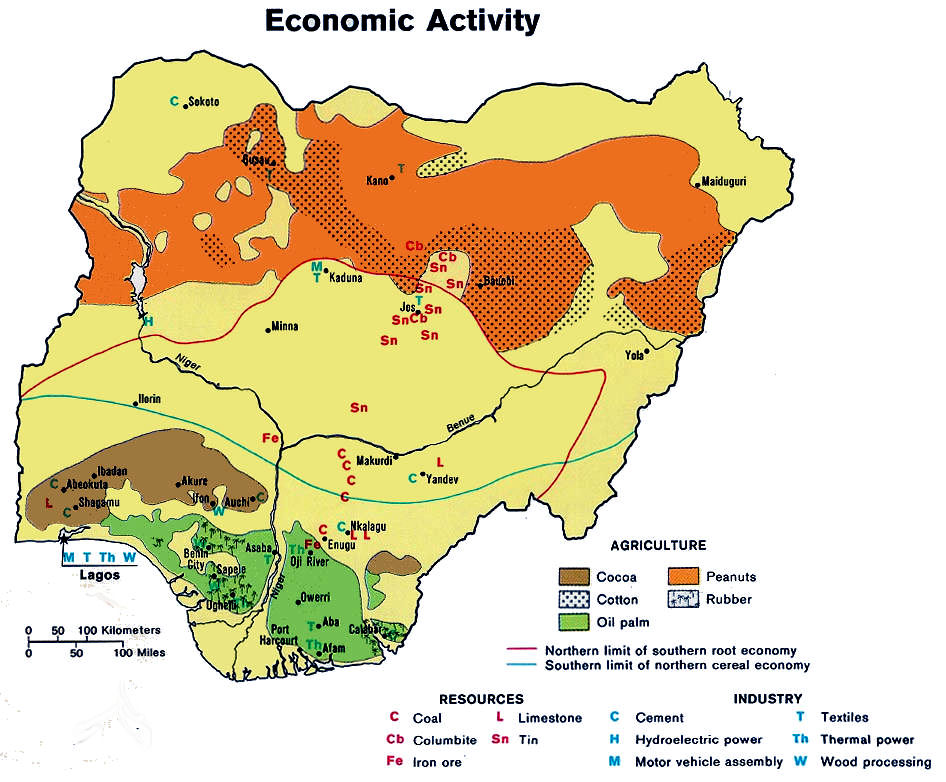
Production: Nigeria’s domestic wheat production is small and dropped 20 percent from 100,000 tons in MY2011/2012 to 80,000 tons in MY 2012/2013. This low-level of production is due mainly to unfavorable local climatic conditions requiring expensive irrigation. Continued threats of “Boko Haram” terrorist activities in most states within the country’s wheat growing belt in the northern region has mostly been responsible for the dropping production.
Demand: The country’s consumption for wheat remained high reaching 4.1 million tons in 2012/2013. Demand is expected to reach 4.2 million tons in 2013/2014 as consumer demand for wheat based foods continues to climb in response to changing tastes as in domestic supplies of other substitute staple products within Nigeria and neighboring countries is not increasing to match population growth. The market gap is filled by wheat imports and wheat milling capacity was estimated at 6.2 million tons, with capacity utilization at 50 percent in 2012/13.
Policy: The Government of Nigeria (GON) initiated an Agriculture Transformation Agenda (ATA) to significantly increase production of five key crops (rice, cassava, sorghum, cocoa and cotton) and reduce food imports. Nigeria’s climatic condition is unfavorable to commercial wheat production. The ATA also seeks to cut food imports through the introduction of levies and proposed import bans on essential staples.
To cut wheat imports and save foreign reserves for the country, the GON introduced a 15-percent levy on imported wheat grains thereby raising the total tariff from 5 to 20 percent in 2012/13. The GON also announced cassava inclusion requirement in wheat flour. The policy mandates cassava flour inclusion in wheat flour, starting with a 10 percent cassava flour inclusion rate, to increase steadily to 40 percent by 2015. Some fiscal incentives, such as duty-free import of related equipment and machinery, were also introduced. These resulted in rising prices for wheat flour and other wheat based foods.
Competition: Nigeria is one of the top three global markets for U.S. wheat (HRW) with exports averaging 3.0 million tons. The U.S. wheat is considered a high quality product and sells at premium. The imposition of additional levy increased prices for the millers, who have begun to pass along their increased costs.
Nigerian consumers are price sensitive and they are compensating for the increased costs of wheat based foods by seeking cheaper alternatives or shifting away from wheat products altogether. This made U.S. wheat slightly less competitive at about $300 per ton (C&F) as flour millers begin to patronize other less expensive wheat supply sources. They are seeking the cheapest wheat sources available to blend them with U.S. wheat to keep their wheat products competitive in the marketplace.
As a result, wheat suppliers from Russia, Australia, Canada, Ukraine, Kazakhstan and others are beginning to export more to Nigeria thereby reducing the U.S. market share. U.S. wheat exports were down about 200,000 tons in MY 2012/13 as compared to the previous year, and the U.S. market share slid to reach about 80 percent of the Nigerian market from 90 percent.
Prospects: Nigeria remains a growth market for wheat imports due mainly to its huge population of about 170 million people, with an annual population growth of 3 percent.
Even as the on-going Boko Haram conflict spreads to more states in the food-producing areas of northern Nigeria, over-the-border trade has also resumed to a degree and the movement of flour and other goods across the international borders has crawled back up slowly to nearly reach market demand levels.
Local flour millers have responded to the Minister’s call for Cassava Bread by adjusting their buying patterns (importing) downward slightly and then remaining less active lately.
Conclusions/Recommendations: The U.S. has a strong reputation as a consistent and reliable supplier of high quality wheat, especially for HRW. Market analysts view that over time consumers will return to insisting on eating more of high quality, wheat flour based products. This will push U.S. wheat market share to grow again. These analysts also submit that if cassava inclusion into bread was actually feasible, Nigeria would be unable to meet cassava demand due to the country’s inadequate cassava production.
Within the wheat and flour milling sector, Nigeria can better strengthen its economy by exploring the constantly growing domestic and export markets for wheat flour and other processed wheat foods. Considering the idle capacity of more than 3 million tons, the hungry domestic and regional markets, and the available ready-to-work unemployed labor in the flour milling and other wheat food processing industries can be developed quickly and strongly contribute to the nation’s economy.
Enjoy this article? Feel free to share your comment, idea or opinion in the comment section
Join the conversation

Related Articles

|
Financial Planning – Is It for Me?As Fitzhugh Dodson said, "Without goals, and plans to reach them, you are like a ship that has set sail with no destination." This saying is particularly true when it comes to financial planning. Except you win a lottery or run into an expected or unexpected inheritance (both of which may [Read more]
|
Posted: 4 years ago |
|
Reality Check on Fiscal Policy in NigeriaAbstract: The fact that the 2014-2016 MTEF projects that an increase of N17 trillion in nominal GDP between 2012 and 2016 will be accompanied by a decline in nominal Federal Government revenue and spending suggests that Nigeria’s fiscal policy has disconnected from economic reality. Urgent ste [Read more]
|
Posted: 14 years ago |

|
Achieving Business ExcellenceFor the past five years, I’ve been working hard in preparation for writing another book. As part of my research, I’ve read literally hundreds of books, articles, and research papers on the key strategies of the world’s top companies—many of which, I am honored to say, are cur [Read more]
|
Posted: 17 years ago |

Management Challenge
Quote of the Day
Featured Video
Searching for Management Training Courses? Local or International?
Follow us on social media
Download Quarterly Guide
